If Webster Groves feels more visually interesting than many suburbs, there is a good reason for it. This city grew from five separate communities that merged in 1896, and that layered history still shows up block by block in the homes you see today. If you are trying to figure out whether a bungalow, Tudor, Victorian, or ranch fits your lifestyle, understanding those differences can save you time and help you buy with more confidence. Let’s dive in.
Why Webster Groves Has So Much Variety
Webster Groves was formed from Webster, Old Orchard, Webster Park, Tuxedo Park, and Selma, and each area developed a little differently over time. According to the City of Webster Groves history overview, that early pattern still shapes the city’s housing mix today.
That is part of what makes Webster Groves appealing to buyers. Within a short drive, or sometimes a short walk, you can move from ornate late-1800s homes to early-20th-century bungalows and then to simpler postwar ranch layouts. The city also has a Historic Preservation Commission, which matters if you are considering exterior changes on an older home.
Historic walking-tour materials also show just how distinct Webster’s pockets can feel. The Historic Webster walking tours highlight Victorian architecture in the Heart of Webster, a large Queen Anne concentration in Webster Park, and a mix of residential, commercial, and civic blocks in Old Orchard.
Bungalows in Webster Groves
Bungalows are often the most approachable historic option in Webster Groves. They usually have low-pitched roofs, broad front porches, and compact one- to one-and-a-half-story layouts, which are classic features of the bungalow form described by the National Park Service architectural guide.
In Webster Groves, bungalows show up most clearly in the city’s early-20th-century housing stock, especially in areas like Webster Park and parts of Tuxedo Park. These homes often appeal to buyers who want character without taking on the scale of a much larger historic house.
From a day-to-day living standpoint, a bungalow can feel cozy and efficient. You may get less square footage, smaller closets, and fewer bonus spaces, but you also get a home that can be easier to furnish, maintain, and update over time.
When you buy a bungalow here, the most common projects are usually function-first improvements such as:
- kitchen updates
- bath renovations
- electrical modernization
- HVAC improvements
- better storage solutions
In many cases, you are improving livability more than completely reworking the structure. That can make bungalows a smart choice if you want original charm with a more manageable project scope.
Tudor Homes in Webster Groves
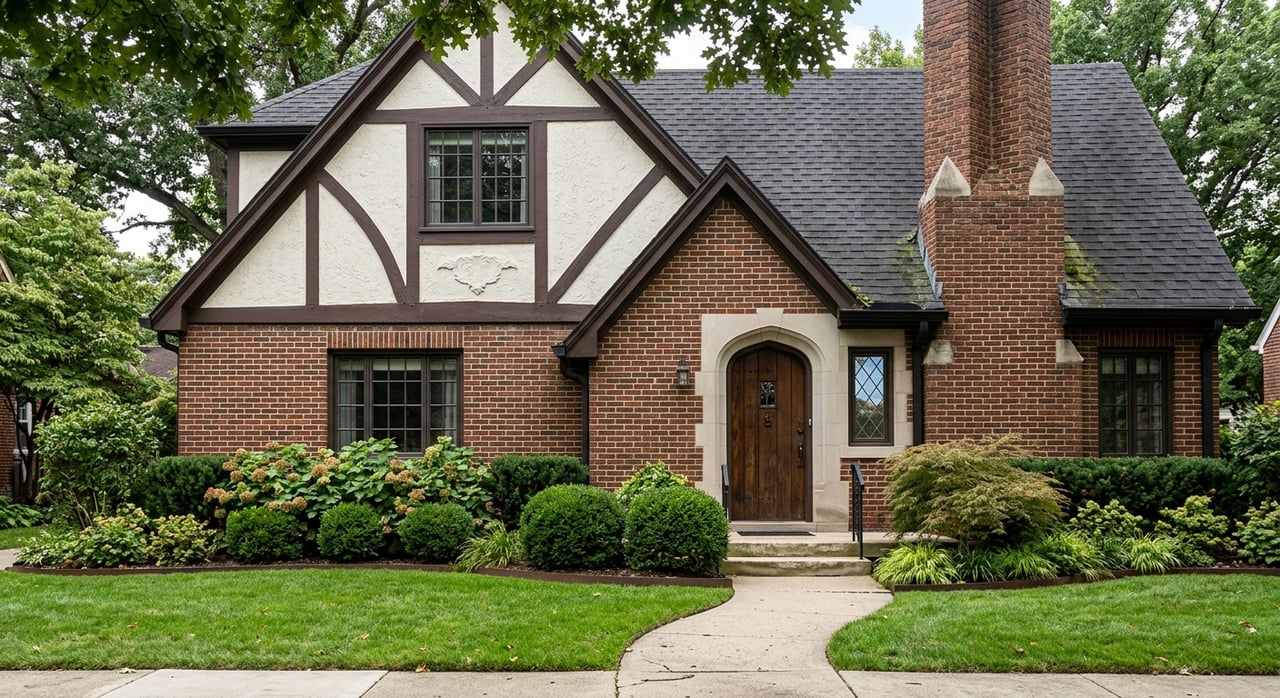
Tudor Revival is one of Webster Groves’ signature styles, especially in Webster Park. The Webster Park historic district documentation identifies Tudor Revival as one of the area’s defining early-20th-century architectural styles.
These homes are usually easy to spot. Tudor houses often feature steep rooflines, prominent masonry, and sometimes half-timbered details, with one-and-a-half to two-and-a-half stories being common according to style references cited in the district materials.
For buyers, Tudors often offer more square footage than bungalows and a stronger sense of separation between rooms. That can be appealing if you prefer formal dining rooms, distinct living spaces, or a home with a more classic layout instead of an open-concept feel.
The tradeoff is that Tudor homes often need careful exterior maintenance. You may want to budget for items like:
- roof work
- masonry repair or tuckpointing
- window maintenance or replacement planning
- moisture-control improvements
Inside, the layout may feel more segmented than newer homes. For some buyers, that is part of the charm. For others, it means thinking carefully about how you actually live before choosing a style based on curb appeal alone.
Victorian and Queen Anne Homes
If you picture Webster Groves as a place of porches, decorative trim, and striking older homes, you are probably thinking of its Victorian and Queen Anne inventory. These styles are especially visible in the Heart of Webster, Marshall Place, Old Orchard, and parts of Webster Park, with additional late-19th-century homes documented in Central Webster.
The Historic Webster tours and Central Webster historic district materials show how important these homes are to the city’s identity. Queen Anne homes, in particular, are known for asymmetrical plans, steep roofs, decorative details, and interior flow often organized around a central staircase rather than a simpler box-like floor plan.
That design can be beautiful, but it also creates a different living experience from a newer home. Rooms may be more specialized, circulation can feel less direct, and updates often need to work around original trim, plaster, windows, and porch details.
If you are considering a Victorian or Queen Anne home, expect renovation conversations to focus on preserving character while improving function. Common priorities often include:
- porch repairs
- plaster work
- wood trim restoration
- window upkeep
- exterior siding or paint maintenance
- rethinking older room divisions for modern living
These homes can be deeply rewarding, but they usually ask more from you as an owner. If you love original details and are comfortable planning updates carefully, they can be some of the most memorable homes in Webster Groves.
Ranches and Postwar Homes
Ranches are not the style most people associate with Webster Groves first, but they are part of the city’s housing mix. The Webster Park district documentation notes a small number of Ranch-style resources, showing that the city’s architecture did continue to evolve beyond its earliest historic periods.
The classic 1950s ranch, as described by the National Park Service references summarized in the research, is typically one story with a large living room, an eat-in kitchen, and a practical bedroom layout. That simplicity is exactly why many buyers still like them.
If you want easier day-to-day living, fewer stairs, and a more straightforward renovation path, a ranch can be a strong fit. These homes often need cosmetic updates and storage improvements, but they may involve fewer preservation-related exterior concerns than a Victorian or Tudor.
For many buyers, ranch homes are attractive because they often offer:
- simpler floor plans
- easier accessibility
- lower-maintenance living patterns
- straightforward kitchen and bath renovations
- less ornate exterior upkeep
That does not make them better or worse than older styles. It just means they solve a different set of needs.
Where These Styles Show Up
Old Webster and Old Orchard
If your priority is being near shops, dining, and civic spaces, Old Webster and Old Orchard are two of the most useful areas to understand. The city identifies both as official business districts, and the historic materials describe Old Webster as tied to early commercial and civic development while Old Orchard blends commercial, educational, and residential blocks.
These locations also stand out for walkability. The research report notes Walk Score examples of 82 for 15 W. Lockwood and 86 for 39 S. Old Orchard Avenue, which is notably walkable by suburban standards.
Webster Park and Tuxedo Park
If you want the classic historic-home story, Webster Park and Tuxedo Park are often where buyers focus. According to the city area history overview, Webster Park was originally promoted as an affluent suburban development, and its curving streets and rolling topography supported larger Victorian-era homes.
This is where you are more likely to see concentrations of Queen Anne, Shingle, Colonial Revival, Tudor Revival, Craftsman, and Prairie influences. Walkability varies more by block here, so it helps to look closely at how far a specific home sits from Lockwood or other commercial nodes.
Central Webster, Marshall Place, and Northwest Webster
These areas help round out the Webster Groves story. Central Webster includes vernacular, Italianate, and Queen Anne homes from the late 1800s, while Northwest Webster is described in the walking tours as an eclectic area with smaller Victorian vernacular homes.
For some buyers, these pockets can offer original character without placing them in the busiest or most architecturally formal sections of the city. If you are open to a home with quirks and charm, these areas are worth exploring.
Price, Walkability, and Project Scope
Webster Groves is an active market, but the exact pricing picture depends on the source and metric. The research report notes that Redfin’s Webster Groves market data reported a median sale price of $424,000 in March 2026, while other portals showed different median figures and inventory counts.
The more useful takeaway for you is not just the headline number. It is that home style, location within Webster, and renovation condition all play a major role in value. Architecturally distinctive pockets, especially those near the central commercial areas, may command stronger pricing.
Walkability also changes quickly from one pocket to the next. According to Walk Score data for Webster Groves, the citywide score is 49, or somewhat walkable, but individual addresses range much higher near Old Webster and Old Orchard.
That means your search should balance three things together:
- the home style you love
- the block-level location you want
- the amount of renovation you are comfortable taking on
A beautiful Tudor on a quieter street may give you more lot size and architectural presence. A bungalow near Lockwood may offer easier daily errands. A ranch may provide the smoothest path if you want simple updates instead of preservation-heavy work.
How to Choose the Right Style
The best Webster Groves home style for you depends less on aesthetics alone and more on how you want to live. A good starting point is to ask yourself a few practical questions before you fall in love with a facade.
Consider:
- Do you want historic character or simpler upkeep?
- How important is walkability to shops and dining?
- Are you comfortable with exterior maintenance on an older home?
- Do you prefer defined rooms or a more open layout?
- Would you rather renovate slowly or move in with fewer projects?
When you answer those questions honestly, Webster Groves gets easier to navigate. Instead of shopping every home the same way, you can focus on the style and location that actually match your goals.
If you are weighing different parts of Webster Groves or trying to decide which home style fits your budget, timeline, and comfort level for updates, Bethany DeMaggio can help you narrow the options and make a confident plan for your next move.
FAQs
What home styles are most common in Webster Groves?
- Webster Groves is known for a mix of bungalows, Tudor Revival homes, Victorian and Queen Anne houses, plus some ranch and postwar homes, with styles varying by neighborhood pocket.
Where can you find bungalows in Webster Groves?
- Bungalows are commonly found in Webster Groves’ early-20th-century housing stock, including parts of Webster Park and Tuxedo Park.
What should buyers expect from Tudor homes in Webster Groves?
- Tudor homes in Webster Groves often offer steep rooflines, masonry-heavy exteriors, more segmented room layouts, and maintenance needs that may include roofs, windows, and moisture control.
Are Victorian homes in Webster Groves harder to update?
- Victorian and Queen Anne homes can require more careful planning because updates often involve porches, plaster, trim, windows, and preserving original layout details.
Which parts of Webster Groves are the most walkable?
- Old Webster and Old Orchard tend to be among the most walkable parts of Webster Groves, especially near Lockwood and Old Orchard commercial areas.
Are ranch homes available in Webster Groves?
- Yes, ranch homes are part of Webster Groves’ housing stock, though they are less iconic than the city’s older historic styles and tend to offer simpler one-story living.